本文主要是介绍【代码随想录】【算法训练营】【第30天】 [322]重新安排行程 [51]N皇后 [37]解数独,希望对大家解决编程问题提供一定的参考价值,需要的开发者们随着小编来一起学习吧!
前言
思路及算法思维,指路 代码随想录。
题目来自 LeetCode。
day 30,周四,好难,会不了一点~
题目详情
[322] 重新安排行程
题目描述
322 重新安排行程
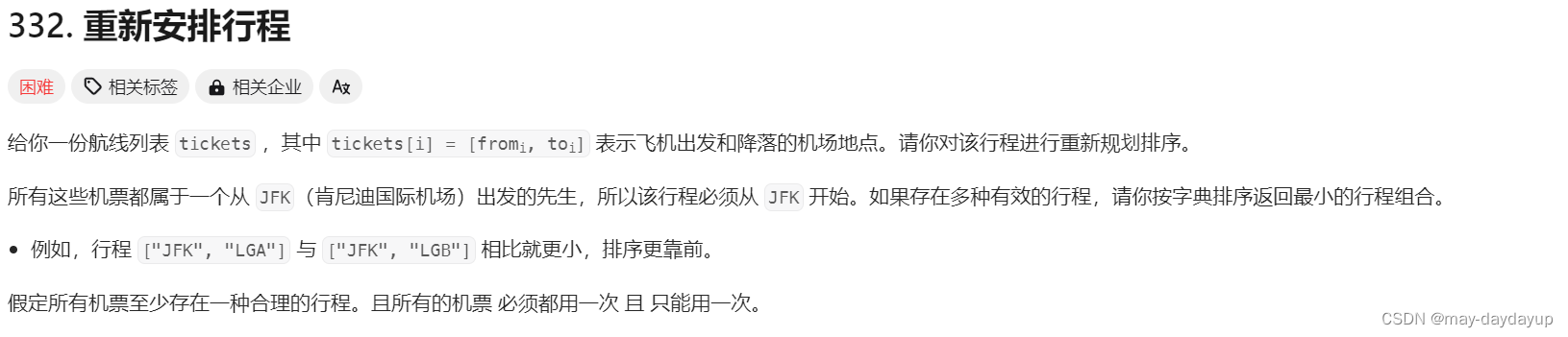
解题思路
前提:……
思路:回溯。
重点:……。
代码实现
C语言
回溯 + 链表自实现
超出时间限制!!
/*** Note: The returned array must be malloced, assume caller calls free().*/#define NAME_LEN 4
#define INVALID_NUM 1000typedef struct airlist {char *start;char **end;int endSize;bool *used;
} airList;struct airlist *list;
int listSize;
char **path;
int pathSize;int findListLoc(char *start, int ticketsSize)
{int j = INVALID_NUM;for (j = 0; j < ticketsSize; j++) {if ((list[j].start == NULL) || (0 == strcmp(start, list[j].start))) {return j;}}return j;
}void insertListLoc(char *end, int loc)
{int endS = list[loc].endSize;int serLoc = endS;if (list[loc].endSize > 0) {}for (int k = endS - 1; k >= 0; k--) {if (0 > strcmp(end, list[loc].end[k])) {strncpy(list[loc].end[k + 1], list[loc].end[k], NAME_LEN);serLoc = k;}}strncpy(list[loc].end[serLoc], end, NAME_LEN);(list[loc].endSize)++;return ;
}void init(char*** tickets, int ticketsSize)
{// 开辟空间// 初始化listlist = (struct airlist *)malloc(sizeof(struct airlist) * ticketsSize);memset(list, 0, sizeof(struct airlist) * ticketsSize);listSize = 0;for (int i = 0; i < ticketsSize; i++) {// 初始化startint loc = findListLoc(tickets[i][0], ticketsSize);if (list[loc].start == NULL) {list[loc].start = (char *)malloc(sizeof(char) * NAME_LEN);strncpy(list[loc].start, tickets[i][0], NAME_LEN);}// 初始化end,按字典序排列if (list[loc].end == NULL) {list[loc].end = (char **)malloc(sizeof(char *) * ticketsSize);for (int v= 0; v < ticketsSize; v++) {list[loc].end[v] = (char *)malloc(sizeof(char) * NAME_LEN);memset(list[loc].end[v], 0, sizeof(char) * NAME_LEN);}}insertListLoc(tickets[i][1], loc);// 初始化used数组if (list[loc].used == NULL) {list[loc].used = (bool *)malloc(sizeof(bool) * ticketsSize);memset(list[loc].used, 0, sizeof(bool) * ticketsSize);}listSize = (listSize < (loc + 1)) ? (loc + 1) : listSize;}// 初始化pathpath = (char **)malloc(sizeof(char *) * (ticketsSize + 1));for (int l = 0; l < (ticketsSize + 1); l++) {path[l] = (char *)malloc(sizeof(char) * NAME_LEN);memset(path[l], 0, sizeof(char) * NAME_LEN);}pathSize = 0;return ;
}bool backtracking(char *start, int  ticketsSize)
{// 退出条件if (pathSize == (ticketsSize + 1)) {return true;}// 递归int loca = findListLoc(start, ticketsSize);if (loca >= listSize) {return false;}bool result = false;for (int m = 0; (m < list[loca].endSize); m++) {// 去重if (list[loca].used[m] == true) {continue;}// 保存该路径strncpy(path[pathSize], list[loca].end[m], NAME_LEN);pathSize++;list[loca].used[m] = true;bool res = backtracking(list[loca].end[m], ticketsSize);if (res == false) {// 回溯pathSize--;list[loca].used[m] = false;result = false;}else{return true;}}return result;
}char** findItinerary(char*** tickets, int ticketsSize, int* ticketsColSize, int* returnSize) {if (*ticketsColSize != 2) {return NULL;}// 初始化init(tickets, ticketsSize);strncpy(path[pathSize], "JFK", strlen("JFK"));pathSize++;(void)backtracking("JFK", ticketsSize);*returnSize = pathSize;return path;
}
回溯 + 哈希
C的哈希函数好难~
/*** Note: The returned array must be malloced, assume caller calls free().*/typedef struct {char *name;        /* key */int cnt;           /* 记录到达机场是否飞过了 */UT_hash_handle hh; /* makes this structure hashable */
} to_airport_t;typedef struct {char *name; /* key */to_airport_t *to_airports;UT_hash_handle hh; /* makes this structure hashable */
} from_airport_t;void to_airport_destroy(to_airport_t *airports) {to_airport_t *airport, *tmp;HASH_ITER(hh, airports, airport, tmp) {HASH_DEL(airports, airport);free(airport);}
}void from_airport_destroy(from_airport_t *airports) {from_airport_t *airport, *tmp;HASH_ITER(hh, airports, airport, tmp) {to_airport_destroy(airport->to_airports);HASH_DEL(airports, airport);free(airport);}
}int name_sort(to_airport_t *a, to_airport_t *b) {return strcmp(a->name, b->name);
}bool backtracking(from_airport_t *airports, int target_path_len, char **path,int path_len) {if (path_len == target_path_len) return true;from_airport_t *from_airport = NULL;HASH_FIND_STR(airports, path[path_len - 1], from_airport);if (!from_airport) return false;for (to_airport_t *to_airport = from_airport->to_airports;to_airport != NULL; to_airport = to_airport->hh.next) {if (to_airport->cnt == 0) continue;to_airport->cnt--;path[path_len] = to_airport->name;if (backtracking(airports, target_path_len, path, path_len + 1))return true;to_airport->cnt++;}return false;
}char **findItinerary(char ***tickets, int ticketsSize, int *ticketsColSize,int *returnSize) {from_airport_t *airports = NULL;// 记录映射关系for (int i = 0; i < ticketsSize; i++) {from_airport_t *from_airport = NULL;to_airport_t *to_airport = NULL;HASH_FIND_STR(airports, tickets[i][0], from_airport);if (!from_airport) {from_airport = malloc(sizeof(from_airport_t));from_airport->name = tickets[i][0];from_airport->to_airports = NULL;HASH_ADD_KEYPTR(hh, airports, from_airport->name,strlen(from_airport->name), from_airport);}HASH_FIND_STR(from_airport->to_airports, tickets[i][1], to_airport);if (!to_airport) {to_airport = malloc(sizeof(to_airport_t));to_airport->name = tickets[i][1];to_airport->cnt = 0;HASH_ADD_KEYPTR(hh, from_airport->to_airports, to_airport->name,strlen(to_airport->name), to_airport);}to_airport->cnt++;}// 机场排序for (from_airport_t *from_airport = airports; from_airport != NULL;from_airport = from_airport->hh.next) {HASH_SRT(hh, from_airport->to_airports, name_sort);}char **path = malloc(sizeof(char *) * (ticketsSize + 1));path[0] = "JFK";  // 起始机场backtracking(airports, ticketsSize + 1, path, 1);from_airport_destroy(airports);*returnSize = ticketsSize + 1;return path;
}
[51] N皇后
题目描述
51 N皇后

解题思路
前提:……
思路:回溯
重点:……
代码实现
C语言
//待补充
[37] 解数独
题目描述
37 解数独

解题思路
前提:……
思路:回溯
重点:……。
代码实现
C语言
// 待补充
今日收获
- 收获不了一点,已晕菜。
这篇关于【代码随想录】【算法训练营】【第30天】 [322]重新安排行程 [51]N皇后 [37]解数独的文章就介绍到这儿,希望我们推荐的文章对编程师们有所帮助!